
Solar screens
How to keep a Reno-Sparks house cool in summer
Start at the windows: shade the west, east and south glass from the outside so the sun's heat is stopped before it reaches the glass, and keep windows and coverings closed through the hot part of the day. Then use what makes Reno different, a summer night that runs about 33 degrees cooler than the afternoon, by opening screened windows after sunset, pulling cool air through with fans, and closing up again in the morning.
Updated · A-Affordable Screen, Sparks
Why Reno houses heat up the way they do
Reno-Sparks summers are hot and dry. NOAA's 1991-2020 normals for Reno-Tahoe International count about 65 days a year at 90F or hotter and 6 days at 100F or hotter, with a June to August average high of about 90F. The sky is clear more often in summer, and at about 4,400 feet the sun is strong; EPA's rule of thumb is that UV rises about 2% for every 1,000 feet of elevation. Our Reno sun data page collects the numbers.
The other half of the story is the night. The same normals put the average summer day-night range at 32.7 degrees. At 4 pm in July the normal temperature is about 90F; by 5 am it is about 61F. Humid climates rarely offer that. A Reno house that keeps the afternoon sun out and lets the night air in has a large head start before the air conditioner even runs.
Step one: stop heat at the windows
Walls and attics matter, but windows are where summer sun walks straight in. The U.S. Department of Energy's Energy Saver guidance put it plainly: in cooling seasons, about 76% of sunlight that falls on standard double-pane windows enters to become heat. Sun through a west window at 5 pm lands on the floor and furniture, which then give that heat back to the room for hours.
Where the shade goes matters as much as having it. Blinds and curtains catch the sun after it has passed through the glass, so much of the heat is already indoors. The DOE says exterior shutters and shades are the most effective at reducing solar heat gain, and Lawrence Berkeley and Pacific Northwest national laboratory researchers wrote in 2024 that exterior-mounted solutions provide the highest protection from solar heat. That is the case for exterior shading of any kind, from trees to awnings to solar screens.
Which windows to shade first
You rarely need to treat every window. Start where the low, hot sun hits glass during the warm hours, and work around the house from there.
| Window faces | When sun hits it in summer | Priority | Good first step |
|---|---|---|---|
| West | Mid-afternoon to sunset, the hottest part of the day, at a low angle eaves do not block | Highest | Exterior shade such as solar screens or a patio shade screen |
| East | Early morning to late morning, low and direct | High, especially bedrooms and kitchens | Exterior shade; close blinds before sunrise |
| South | Midday, high in the sky | Medium; eaves often help | Shade if the overhang is short; see our winter guide for this side |
| North | Little direct sun | Low | Usually leave open for daylight |
| Patio slider or picture window | Depends on direction; large glass area | Often the biggest single source | Shade the glass or the patio outside it |
Sun paths vary with lot, trees and neighboring houses. We look at each window on the free on-site measure.
Step two: pick the shade that fits the window
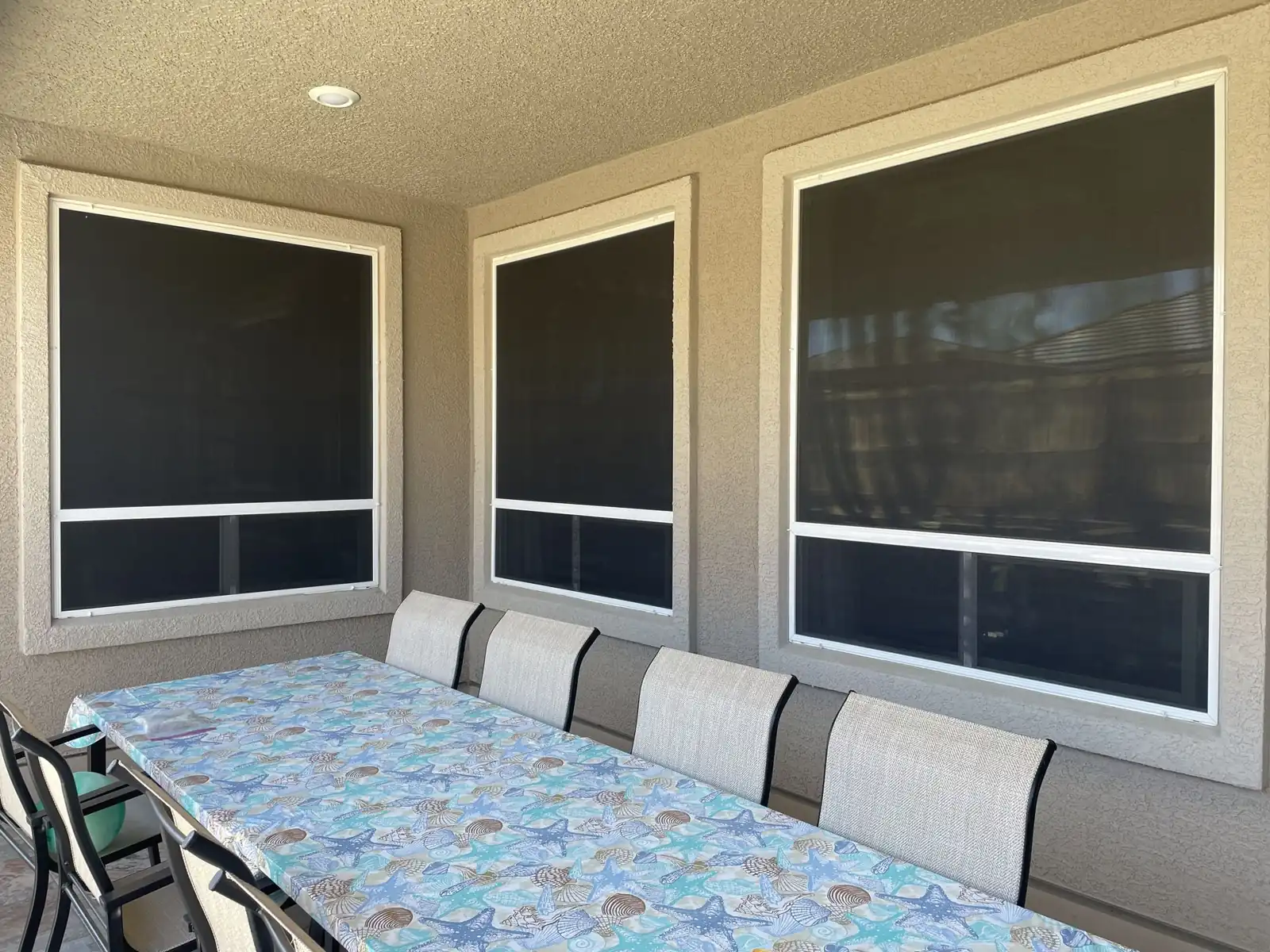
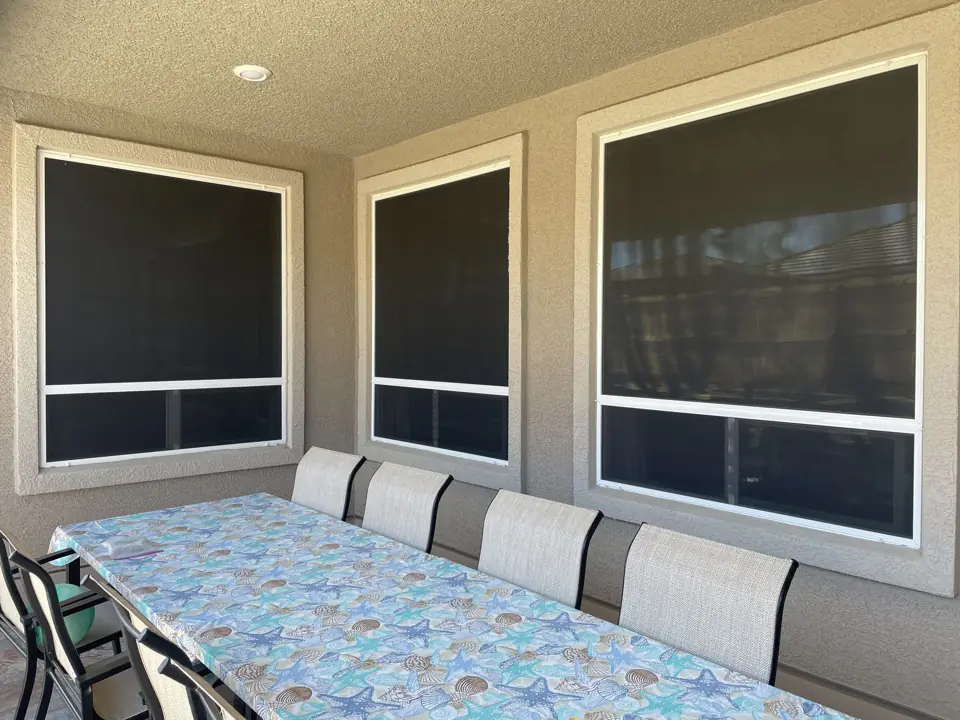
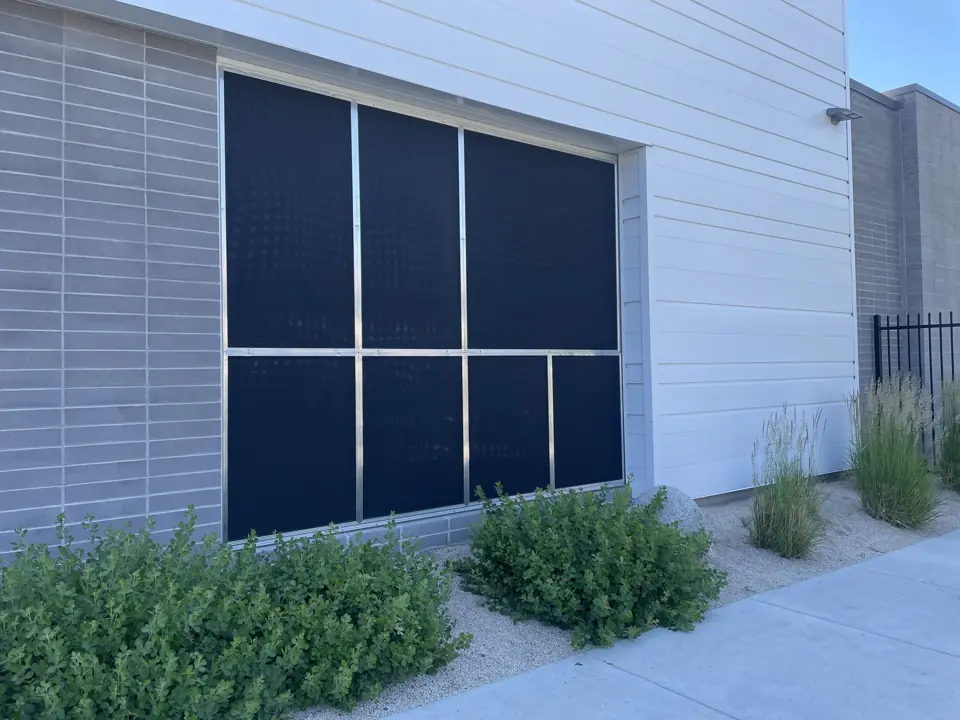
Each option has its place. Mature trees on the west side are excellent shade, though they take years to grow. Awnings suit some windows and patios. Solar screens are a mesh fabric in an aluminum frame that sits outside the glass; they cut heat and glare while keeping the view, and the fabric's openness factor sets the trade between heat control and visibility. Patio and carport shade screens do the same job for an outdoor space and the sliding door beside it.
We compare them side by side in ways to block summer sun, and cover the fabric choice in 80% vs 90% solar screens. One honest note: in Reno, shading is a summer tool. Researchers at Lawrence Berkeley found that in climates like ours, solar screens save cooling energy but add heating energy, which is why many people take screens off south windows for winter.
Step three: flush the heat out at night
Once the sun is handled, the night range does the heavy lifting. The idea is simple: when the air outside drops below the air inside, bring it in and push the warm air out, then seal the house before the day heats up again.
- Wait for the crossover. Check an outdoor thermometer. When the outside temperature falls below indoors, usually a few hours after sunset in July, turn off the AC and start opening up.
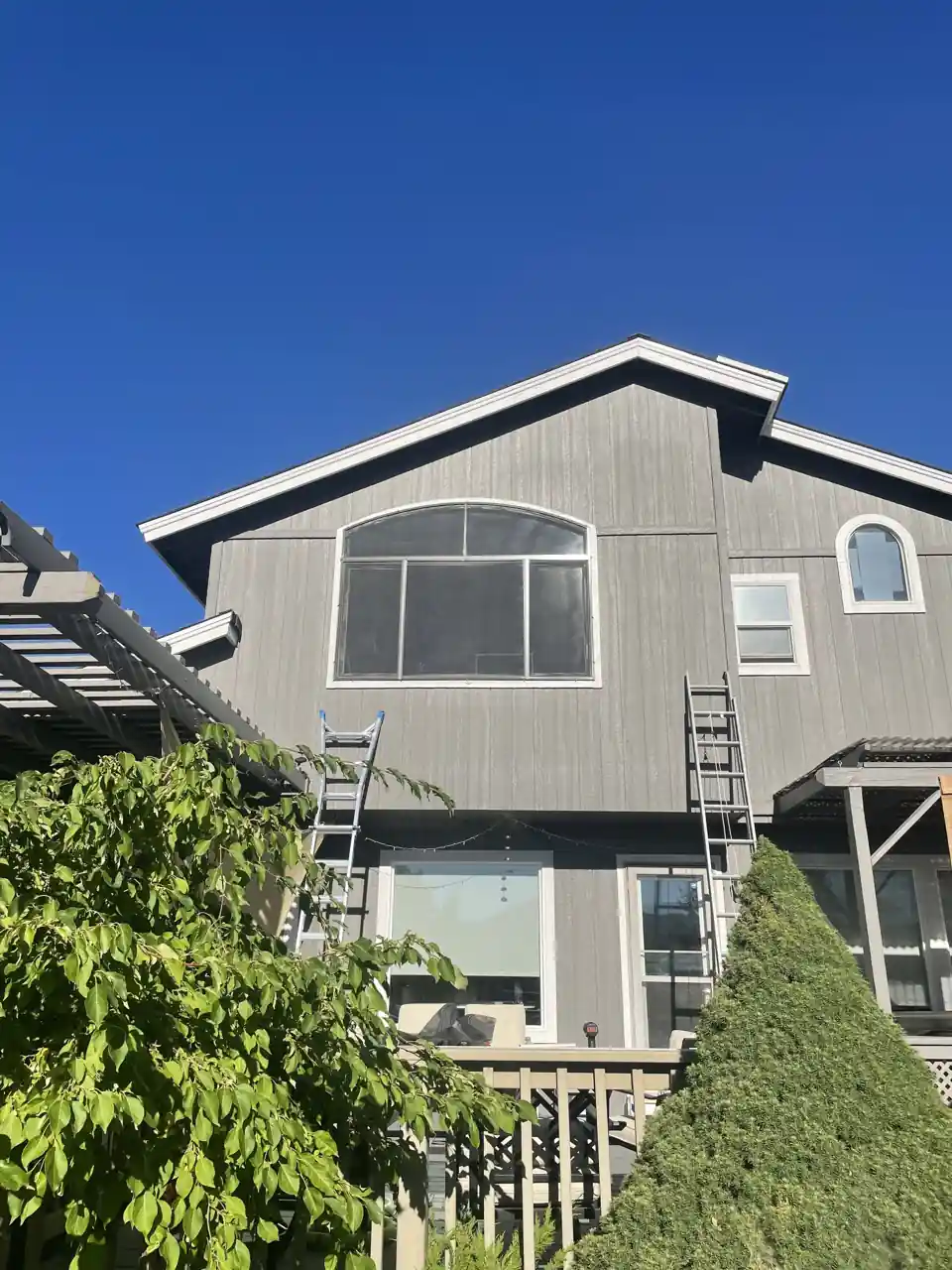
- Open low and high, on opposite sides. Open windows on the shaded or upwind side of the house and on the opposite side, so air has a path. Open an upstairs window if you have one; warm air rises and leaves there.
- Add fans in windows. Summer mornings and late nights are often calm here, so a box fan facing out in one window, pulling air through another, moves far more air than waiting for a breeze.
- Keep going while it is cool. Nights in July and August bottom out near 60F by dawn. The longer the windows stay open overnight, the more heat leaves the walls and furniture.
- Close up by mid-morning. Shut windows once the outside temperature climbs back toward the indoor temperature, and close blinds on the east side.
- Keep sunny windows shaded all day. Leave west and south coverings closed until the sun is off that side.
Screens are what make night cooling practical
Night cooling means windows open for hours after dark, and that only works if the screens are whole. Northern Nevada Public Health notes mosquitoes are most active during morning and evening hours, and in 2024 it found West Nile virus in mosquito samples from the 89436 and 89521 ZIP codes. A torn screen or a missing one on a bedroom window is an open invitation.
Check every window you plan to open. Torn mesh can be replaced with new mesh rolled into the existing frame through screen repair and rescreening, and missing screens can be built to the opening as custom window screens. For the patio slider, a tight, whole screen door lets you leave the glass open all night; a worn one can be rescreened if the frame is good, or replaced with a custom new sliding screen door.
The daytime routine
Closed windows and closed coverings on the sunny sides keep the cool night air in. The DOE has observed that most window coverings stay in the same position every day, so a small habit of closing the west blinds after lunch and the east blinds before bed pays off. Exterior screens do this without anyone remembering.
Cut the heat you make indoors too. Run the oven, dryer and dishwasher in the evening or early morning, grill outside on hot days, and switch off lights and electronics you are not using. Ceiling fans make a room feel cooler by moving air over skin, so turn them off in empty rooms. Keep the air conditioner's filter clean and have the system serviced before summer.
When to keep the windows shut at night
Not every summer night is a good night to open up. Wildfire smoke drifts into the valley in some summers, and the EPA's advice on smoky days is to keep windows and doors closed and use fans and air conditioning to stay cool. Screens do not filter smoke. Check the air quality before opening up; our guide to wildfire smoke, pollen and screens explains what screens can and cannot do.
Late-afternoon wind is another reason to wait. From April through July the airport's afternoon wind averages about 13 mph, and it tends to ease after sunset, which is one more reason the night hours are the right time for open windows.
Getting the windows sorted
A-Affordable Screen has shaded and screened Reno-Sparks windows since 1997. On a free on-site measure we walk the house with you, note which windows take the afternoon sun, and bring fabric samples so you can see the view through them before choosing. We work across Sparks, Reno and South Reno. Several windows at once may qualify for the multi-window discount on our discounts page. Call or text (775) 240-0418, or ask for a free quote.
Questions
Straight answers
What is the fastest way to cool a hot house in Reno?
Keep sun off the west and east glass during the day, then open windows and run window fans once the outside air drops below the inside temperature in the evening. Reno summer nights fall to about 60F by dawn.
Are blinds or outside shades better for heat?
Outside shades. The DOE says exterior shutters and shades are most effective at reducing solar heat gain, because they stop the sun before it passes through the glass.
Which side of the house gets the hottest sun?
West. It takes low afternoon sun during the hottest hours of the day, and eaves rarely block it. East is next, in the morning.
Should I open windows at night in Reno?
Usually yes, on clear nights, as long as your screens are whole. Skip it on smoky nights and keep the windows closed as EPA advises.
Do solar screens help in winter?
They block winter sun you might want on south windows. Many people remove south-side screens for winter; our solar screens in winter guide covers the choice.
Do solar screens darken the house?
Some. A more open fabric lets in more light and view; a tighter one blocks more heat and glare. We bring samples to the house so you can see the difference.
Related
Keep reading
Sources: NOAA NCEI: U.S. Climate Normals 1991-2020 (Reno-Tahoe International Airport) (opens in a new tab) · U.S. DOE Energy Saver: Energy Efficient Window Coverings (Internet Archive capture, Jan. 1, 2026) (opens in a new tab) · LBNL / PNNL for U.S. DOE: Saving lives through affordable shading (2024 peer review) (opens in a new tab) · U.S. EPA: Wildfires and Indoor Air Quality (opens in a new tab)
Since 1997 · Sparks, Nevada
Ready for a free quote?
Call or text us. Or leave your details and we call or text you back.
Monday-Friday 8:00 am-4:00 pm
We come to you anywhere in the Reno-Sparks area to measure and quote, at no charge.