

Services
Solar screens: installation, replacement and repair
A-Affordable Screen installs new solar screens, replaces worn ones and repairs damaged frames and fabric on homes across Reno and Sparks. We measure every window at your home, bring fabric samples with us and leave you a free quote.
Updated · A-Affordable Screen, Sparks
What a solar screen does
A solar screen is a tightly woven shade fabric stretched in a metal frame and mounted on the outside of a window. It looks a lot like an insect screen from across the street, but the weave is much denser, so it stops a large share of sunlight before that light ever reaches the glass.
The U.S. Department of Energy says solar screens can reduce solar heat gain, UV damage and glare while still allowing a view out and some daylight in. Because the fabric sits outside, the heat it catches stays outside. An interior blind only catches sunlight after it has already passed through the window and warmed the room. The DOE also notes that about 76 percent of the sunlight that falls on standard double-pane windows in cooling season enters the house as heat.
- Cooler rooms on the sunny side of the house, especially in the afternoon
- Less glare on TVs, computer screens and kitchen counters
- Slower fading of carpet, drapery, furniture and wood floors
- More daytime privacy, because it is harder to see into the house from outside

Why they make sense in the high desert
Reno-Tahoe International Airport averages 65 days a year at 90 degrees or hotter, and July afternoons average a high of about 94 degrees, according to NOAA's 1991-2020 climate normals. Most summer days are clear, so west-facing windows take direct sun through the hottest part of the day.
Sparks sits at roughly 4,400 feet. The EPA notes that UV radiation increases about 2 percent for every 1,000 feet of elevation, so the valley gets noticeably more UV than a sea-level city with the same sun angle. That UV is what bleaches fabric and floors near a window.
Choosing the fabric: openness and color
Solar screen fabric is sold by how open the weave is. A more open fabric lets in more light and gives a clearer view, and a tighter fabric blocks more heat and glare. The Department of Energy puts it simply: greater openness reduces protection against glare and heat gain but increases visibility and light transmission.
Fabrics are usually labeled with a percentage, such as 80 or 90 percent, that describes roughly how much sun the weave is meant to block. Color matters too. Many homeowners find darker colors easier to see through, while lighter colors blend with light stucco. We bring samples to your home so you can hold them up to your own windows before you decide.
| Option | View out | Heat and glare | Typical use |
|---|---|---|---|
| 80 percent weave (more open) | Clearer view and more daylight | Blocks less sun than a 90 percent weave | Rooms that already feel dim, windows with a view you want to keep, east glass |
| 90 percent weave (tighter) | Dimmer view, a bit like a tinted window | Blocks more sun and glare | West and south glass that takes hard afternoon sun, TV and media rooms |
| Darker colors | Typically easier to see through from inside | Set mainly by the weave, so compare samples | Most homes where the view out matters most |
| Lighter colors | Typically a little more glare looking out | Set mainly by the weave, so compare samples | Matching light stucco, siding or trim |
Percentages are the fabric maker's rating and vary by product. Our guide to 80 vs 90 percent solar screens goes deeper.
A summer product, with winter choices
Reno is hot in summer but still a heating climate overall. NOAA's normals for the airport show about 4,669 heating degree days a year against 1,038 cooling degree days. A 2013 Lawrence Berkeley National Laboratory study for the Department of Energy found that in central climates solar screens are effective at saving cooling energy but add a heating penalty, because they also block sun you would welcome in winter.
That is why we talk through each side of the house. West and east windows are the usual first choice. North windows rarely need solar screens. South windows are a judgment call: some homeowners screen them for glare and fading, others leave them bare to let the low winter sun in. Our guide to solar screens in winter walks through the trade-off.
How installation works
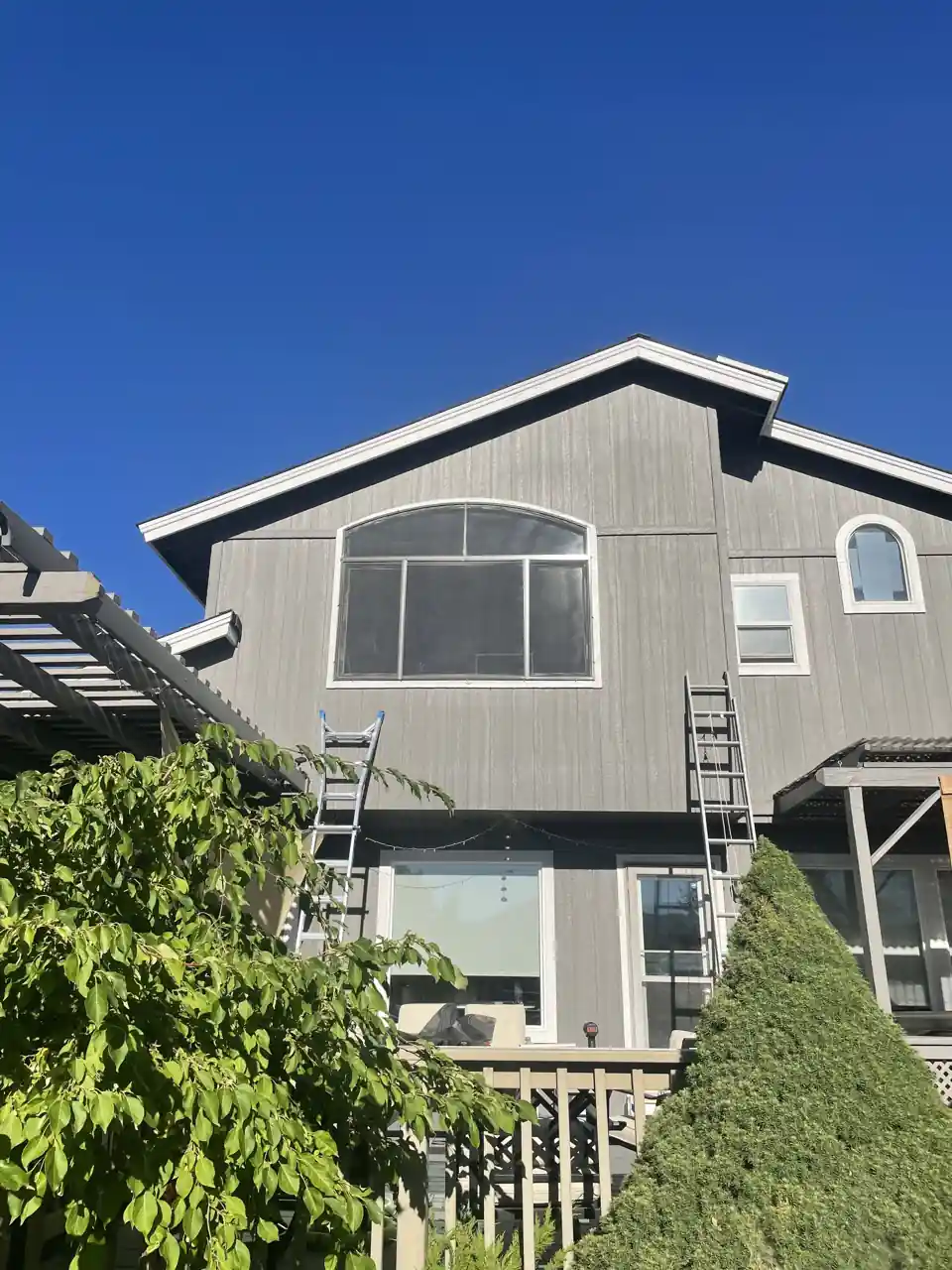
Every screen is made to the window it will cover. We measure each opening on site, including upper-story and arched windows, then build frames to size and mount them on the outside of the window. Screens can be made in shapes to fit windows and doors of many sizes.
Some homeowners start with the rooms that get the worst afternoon sun and add the rest of the house later. Screening several windows at once can qualify for our multi-window discount. Businesses have the same options on storefront and office glass.
Replacing or repairing old solar screens
Solar screens live outdoors in strong sun and afternoon wind. Over the years the fabric can fade, sag or tear, clips can go missing and frames can bend. If the frame is still straight and solid, we can put new solar fabric in it. If the frame is bent, cracked at the corners or no longer sits tight against the window, a new screen is usually the better choice. The same approach applies to insect screens, see screen repair and rescreening.
We also replace screens that blew off in a windstorm or were damaged during painting, stucco or window work. Tell us how many are affected and we will measure and quote them together.
Signs your windows could use solar screens
- One room on the west side is the hottest in the house by late afternoon
- Glare washes out the TV or a computer screen at the same hour every day
- Carpet, drapes, furniture or wood floors are fading near a window
- Blinds stay shut all summer just to keep the heat down
- Your old solar screens are faded, sagging, torn or missing clips
- You want daytime privacy without giving up the view out
Before you call
- Note which way the windows face. West and east glass takes low, hard sun. A phone compass is enough.
- Count the windows, including upper-story, arched and patio door glass, so the quote covers the whole job.
- Check old frames. If you already have solar screens, see whether the frames are straight. Sound frames can often take new fabric.
- Snap a photo or two and text them to (775) 240-0418. It helps us plan for second-story windows.
How a solar screen job goes
- Call or text. Tell us roughly how many windows and which sides of the house get the sun.
- Free on-site measure. We measure every opening at your home and bring fabric samples to hold up to your own glass.
- Your quote. You get a price for the windows you choose, with any senior, military, referral or multi-window discount applied. Installation carries a lifetime warranty and solar screen material a 20-year warranty, see our warranty page.
- Built to size. Each frame is cut to its window and the fabric is stretched to an even tension so it lies flat.
- Install and check. Screens mount on the outside of the window, and we check each one for a snug fit before we leave.
Price
What affects the price
- Number of windows. More windows in one visit can qualify for the multi-window discount.
- Window size. Larger openings take more fabric and a stiffer frame.
- Shape. Arched and odd-shaped windows take more measuring and fabrication than rectangles.
- Height and access. Upper-story windows need ladders and more time on site.
- Fabric. Openness and color vary by fabric, and we show samples so you can compare.
- New screen or new fabric. Refitting a sound frame with fabric uses less material than building a new screen.
- Mounting. How the screen attaches depends on the window and the wall around it.
Every price is quoted after the free on-site measure. For published ranges from other sources, see our solar screen cost guide.
Reno-Sparks
Reno-Sparks sun, by the numbers
NOAA's 1991-2020 normals for Reno-Tahoe International Airport count about 65 days a year at 90 degrees or hotter and 6 at 100 or hotter, with a summer average high near 90. From 2016 to 2025 the airport averaged about 77 days a year at 90 or hotter and reached 108 degrees on July 16, 2023.
The valley floor sits near 4,400 feet. By the EPA's rule of about 2 percent more UV per 1,000 feet, that is roughly 9 percent more UV than at sea level. NASA's solar data for Sparks shows about 8.3 kilowatt-hours of sunlight per square meter per day in June, about four times December's level. More on our Reno sun data page.
Sources: NOAA NCEI U.S. Climate Normals 1991-2020 and GHCN-Daily 2016-2025, Reno-Tahoe International Airport; EPA 430-F-04-020; NASA POWER climatology 2001-2020.
Caring for solar screens
- Rinse with a garden hose a few times a year to clear dust and pollen
- Use a soft brush and mild soap for heavier dirt, then rinse, and skip the pressure washer
- Check clips and fasteners after a windy spell, since a loose screen can work its way out
- Aim sprinklers away from the screens to limit hard-water spots
- Before painting or stucco work, have the screens taken down and stored flat
- If fabric starts to pull from the frame, call early, because a sound frame can often take new fabric
Our work
Before and after


Reviews
What customers say
“I cannot say enough good things about Larry and A Affordable Screen. We had him put sun screens on all our windows two years ago. Larry was personable, professional and got our screens installed quickly. They have been great screens. However, I noticed the frame on one of the screens looked like the coating was peeling off. It was the only screen doing it. I called Larry and the next day he came and got the screen to have it replaced for no cost. He didn't have to stand behind his screen but he definitely did. You don't see service like this much any more. I highly recommend A Affordable screen.”
“I had solar screens installed by Larry and team and could not be more pleased! Communication was great, and Larry made ordering and installation a breeze.”
“We are very pleased with the quality of work that Affordable screens provided. Larry Ivy was a great communicator and a true professional.”
Questions
Straight answers
Will solar screens make my rooms dark?
They make rooms dimmer on sunny days, which is part of how they cut glare. How much depends on the fabric's openness and color, so we bring samples to compare at your windows.
Can I still see out through a solar screen?
Yes. During the day you can see out much like looking through a dark insect screen. More open fabrics give a clearer view than tighter ones.
Can you put solar screens on second-story windows?
Yes. We screen upper-story and arched windows, and the before and after photos on this page show one of those jobs.
Do solar screens work on the inside of the window?
Interior solar shades exist, but an exterior screen stops the sun before it heats the glass. That is why we mount solar screens on the outside.
Should I put solar screens on every window?
Usually not. West- and east-facing windows get the most benefit, and north windows rarely need them. South windows are a choice, because solar screens also block winter sun that helps warm the house.
Are there rebates for solar screens in Nevada?
As of fall 2026 we have not found an NV Energy or State of Nevada rebate for solar screens, and the federal 25C home improvement credit ended for property placed in service after December 31, 2025. The state's Weatherization Assistance Program lists solar screens among its improvements for income-qualified households.
How do solar screens compare with window tint?
Both cut glare and heat. A screen sits outside the glass and can be taken down, while film is applied to the glass itself. Our guide to solar screens vs window tint compares them side by side.
Guides
Guides for this service
Sources: U.S. Department of Energy, Energy Saver: Energy Efficient Window Coverings (archived copy, January 2025) (opens in a new tab) · Lawrence Berkeley National Laboratory for U.S. DOE, Energy Savings from Window Attachments (2013) (opens in a new tab) · U.S. EPA, A Guide to the UV Index (EPA 430-F-04-020) (opens in a new tab) · NOAA NCEI, U.S. Climate Normals 1991-2020 (Reno-Tahoe International Airport) (opens in a new tab)
Since 1997 · Sparks, Nevada
Ready for a free quote?
Call or text us. Or leave your details and we call or text you back.
Monday-Friday 8:00 am-4:00 pm
We come to you anywhere in the Reno-Sparks area to measure and quote, at no charge.