

Solar screens
80% vs 90% solar screens: which openness is right?
An 80 percent solar screen has a looser weave that keeps more of your view and daylight, while a 90 percent screen is woven tighter to stop more heat, glare and UV at the cost of a darker room and a dimmer view. Most homes do best with a mix: 90 percent on the west and east glass that overheats, 80 percent where the view matters.
Updated · A-Affordable Screen, Sparks
What the numbers mean
The 80 or 90 in a solar screen's name describes how much of the sun's heat and glare the fabric is rated to block. It is a fabric rating, not a promise about your electric bill or your room temperature, because the glass, the window's direction, the frame fit and your air conditioner all play a part too.
The number that explains the difference between the two is the openness factor: the share of the fabric that is open holes rather than yarn. The U.S. Department of Energy puts it plainly: 'The openness factor on solar screens varies and affects the efficiency benefits; greater openness reduces the protection against glare and solar heat gain but increases visibility and light transmission.'
So the choice is always a trade. Every step toward a tighter weave buys more shade and gives up some daylight and view. Neither weave is better in general; each is better for a particular window.

One maker's published figures
Phifer, a large U.S. screen fabric maker, publishes the figures below for its SunTex line, and describes the line as blocking 80 to 90 percent of the sun's heat and glare. We quote them to show how the two weaves compare, not as a statement of the fabric we install; we bring samples to your home so you can see the options for yourself.
| 80 percent weave | 90 percent weave | |
|---|---|---|
| Openness factor | About 25 percent | About 10 percent |
| Visible light through (at a 30 degree angle) | About 36 to 39 percent, by color | About 18 to 20 percent, by color |
| UV blockage | About 75 percent | About 90 percent |
| View out by day | Clearer, more color and detail | Softer, a little like tinted glass |
| Heat and glare | Good reduction | The most reduction of the two |
| Room feel | Bright, close to normal daylight | Noticeably dimmer |
| Best for | South glass, view windows, kitchens, north-facing rooms that need light | West and east glass, bedrooms, TV rooms, offices with screen glare |
Figures are Phifer's for SunTex 80 and SunTex 90 and vary by color. Other fabric makers publish their own. Learn the terms in our glossary.
What that looks like in a room
Those light figures are the practical difference. By the maker's own numbers the 90 weave lets through roughly half the visible light of the 80 weave. In a west bedroom that bakes every afternoon, that dimming is a relief. In a north-facing kitchen or a living room with a mountain view, it can feel like a cloudy day all the time.
Both weaves let you see out during the day. The tighter 90 weave looks a little more like tinted glass from inside, and details at a distance soften. The looser 80 weave keeps more color and sharpness in the view. Fabric color changes this too: dark colors are easier to see through than light ones, which our colors and privacy guide explains.
Why the sun's angle matters
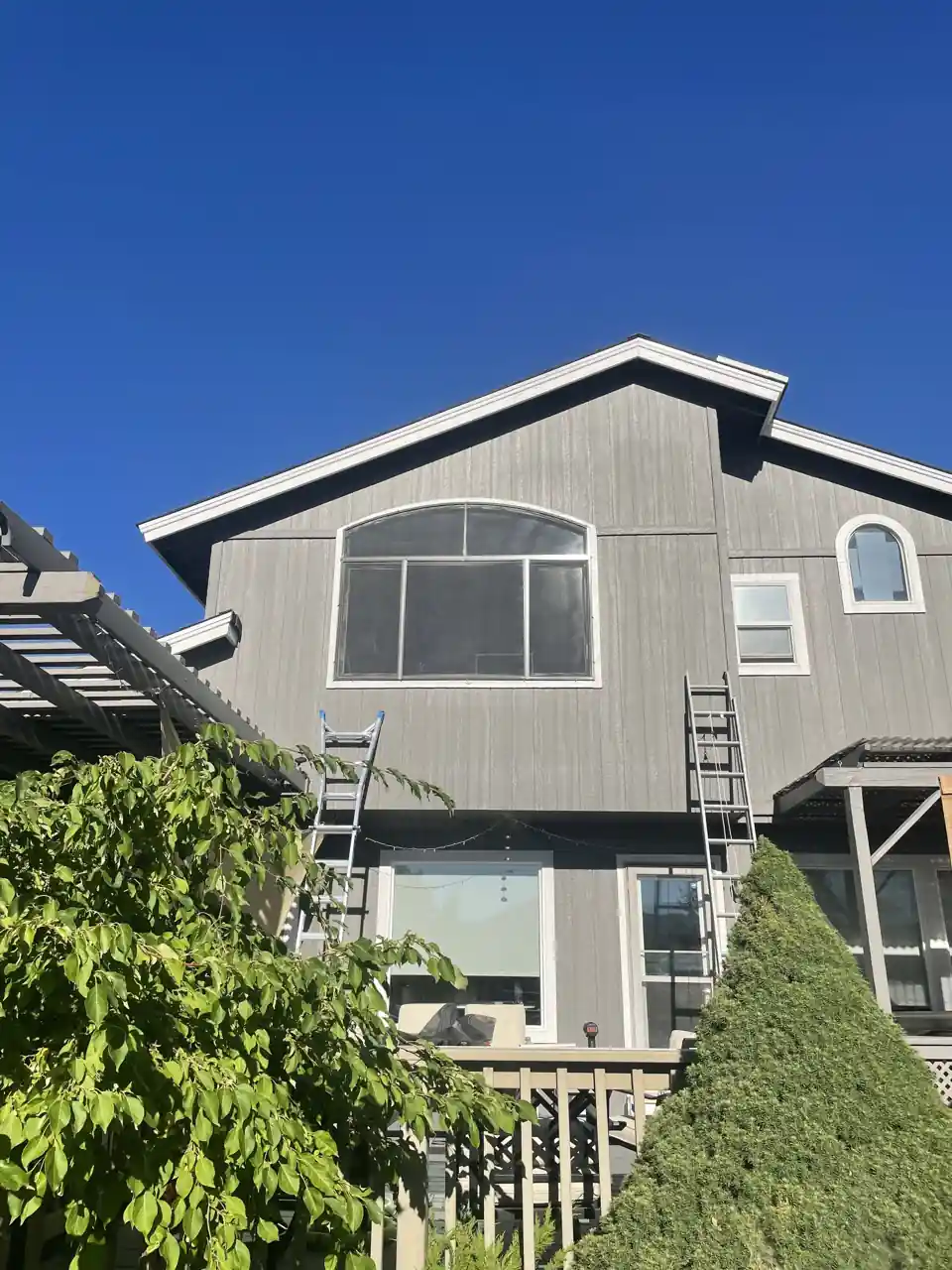
Phifer measures light at a 30 degree angle because the sun rarely hits a window straight on. At midday in summer the sun is high, and much of it strikes wall-mounted glass at a steep angle. Late in the afternoon it drops low in the west and shines almost straight into west-facing windows and sliders. That is when the fabric does the most work and when the difference between the two weaves is easiest to feel.
That timing lines up with Reno's heat. NOAA's 1991-2020 normals for Reno-Tahoe International Airport put July's average high at 93.9 degrees, with about 24 days at 90 or hotter in July and 22 in August. On those days the room behind a west window warms up in the hours when the air outside is already at its hottest. You can see the month-by-month numbers on our Reno-Sparks sun data page.
East windows get the same low, direct sun in the morning, when the air is still cool. That is why many owners are more relaxed about the east side and choose by how the room is used rather than by the heat alone.
Choosing by direction in Reno-Sparks
- West windows and sliders: the strongest case for 90 percent. They catch sun during the hottest hours, and in July and August Reno averages a high above 92 degrees, according to NOAA's normals.
- East windows: 90 percent where morning sun wakes people or heats a bedroom, 80 percent in a kitchen or breakfast nook you want bright.
- South windows: often 80 percent, or none. Reno is heating-dominated, with about 4,669 heating degree days a year against 1,038 cooling degree days (NOAA normals), so low winter sun through south glass is worth keeping. See our winter guide.
- North windows: rarely need solar fabric. A standard custom window screen is usually enough.
- Rooms with valuable views: 80 percent, even on the west side, if a slightly warmer room is an acceptable trade.

Fading and UV
If the reason you are shopping is a faded couch, rug or wood floor, the UV figure matters more than the heat figure. By Phifer's specs the 90 weave blocks noticeably more UV than the 80. Reno-Sparks sits around 4,400 feet, and the EPA notes that UV rises about 2 percent for every 1,000 feet of elevation, so the valley floor gets roughly 9 percent more UV than sea level by that rule of thumb. Homes in the foothills of Spanish Springs and the North Valleys sit a few hundred feet higher again.
The EPA also notes that UV 'peaks in spring and summer (April to August)' and at midday. Neither weave stops fading completely; they slow it. If one room holds the rug or artwork you care about most, that room is a good candidate for 90 percent even if the rest of the house gets 80.
What neither weave does
Neither weave is a blackout. Both let daylight through, so a bedroom for a day sleeper still needs a room-darkening shade inside.
Neither weave helps in winter. The Lawrence Berkeley National Laboratory's 2013 study for DOE found that in central climate zones 'Solar screens and roller shades are effective in saving cooling energy, but they impose a penalty on heating energy.' In Reno's long heating season that is an argument for taking screens down from south windows in fall, whichever weave you choose.
Neither weave gives privacy after dark. With lights on inside, people outside can see in through any solar fabric, so pair screens with blinds or curtains for night.
Mixing weaves on one house
There is no rule that every window must match. From the street, 80 and 90 percent fabric in the same color look very similar, and many owners put the denser fabric only where the sun is harshest. If your HOA has rules about exterior appearance, check them before you settle on a color.
Commercial buildings follow the same logic: dense fabric on west-facing storefront glass and offices that fight afternoon glare on screens and monitors, more open fabric where display windows need to show merchandise. Our commercial solar screens page covers storefront work.
The same fabrics are used on patio shade screens, where the choice is between a brighter, more open patio and a shadier one that blocks more of the low west sun.
A simple way to decide, window by window
- List each window by direction. Walk the house with a compass app and note which way each window and slider faces.
- Note when each room gets hot. An afternoon problem on the west side points to 90 percent. A brief morning glare on the east side may be fine with 80.
- Mark the view windows. Where the view is the reason you bought the house, lean toward 80 percent even on a sunny side.
- Decide on south glass last. Think about winter. Many owners use 80 percent there and take those screens down in fall, or leave south glass unscreened.
- Check color rules. If you have an HOA, read its exterior color guidelines before choosing a fabric color.
- Hold up real samples. We bring 80 and 90 percent samples to your home and hold them against your windows at the time of day that bothers you, then measure every opening. See how it works.
Questions
Straight answers
Is a 90 percent solar screen always better?
Only for heat and glare. It also darkens the room and dims the view, so it suits hot west and east glass better than rooms where daylight matters.
What is openness factor?
The share of the fabric that is open space. Phifer lists about 25 percent for its 80 weave and about 10 percent for its 90 weave. See our glossary.
Can I use different percentages on different windows?
Yes. Many homes use 90 percent on the west and east and 80 percent elsewhere. In the same color they look nearly identical from outside.
Will 90 percent screens stop my furniture from fading?
They slow it. Phifer rates its 90 weave at about 90 percent UV blockage and its 80 weave at about 75 percent, but no screen stops fading completely.
Does a 90 percent screen cost more than an 80 percent screen?
Price depends on window size, count, frame and fabric. Our solar screen cost guide explains what drives the price, and the quote lists each window, so you can ask for both weaves priced side by side.
Can I switch weaves later?
Yes. If the frame is sound, the fabric can be replaced with a different weave in the same frame. That is a form of rescreening.
Sources: Phifer: SunTex 80/90 product specifications (opens in a new tab) · U.S. DOE Energy Saver: Energy Efficient Window Coverings (archived Jan. 1, 2026) (opens in a new tab) · NOAA NCEI: U.S. Climate Normals 1991-2020 (Reno-Tahoe International Airport) (opens in a new tab) · U.S. EPA: A Guide to the UV Index (opens in a new tab) · LBNL for U.S. DOE (2013): Energy Savings from Window Attachments (opens in a new tab)
Since 1997 · Sparks, Nevada
Ready for a free quote?
Call or text us. Or leave your details and we call or text you back.
Monday-Friday 8:00 am-4:00 pm
We come to you anywhere in the Reno-Sparks area to measure and quote, at no charge.