

Services
Commercial solar screens
A-Affordable Screen makes and installs solar screens for commercial windows in the Reno-Sparks area, including large storefront glass. The screens cut glare, heat and UV fading while customers and staff can still see out, and every job starts with a free on-site measure and quote.
Updated · A-Affordable Screen, Sparks
What the job looks like
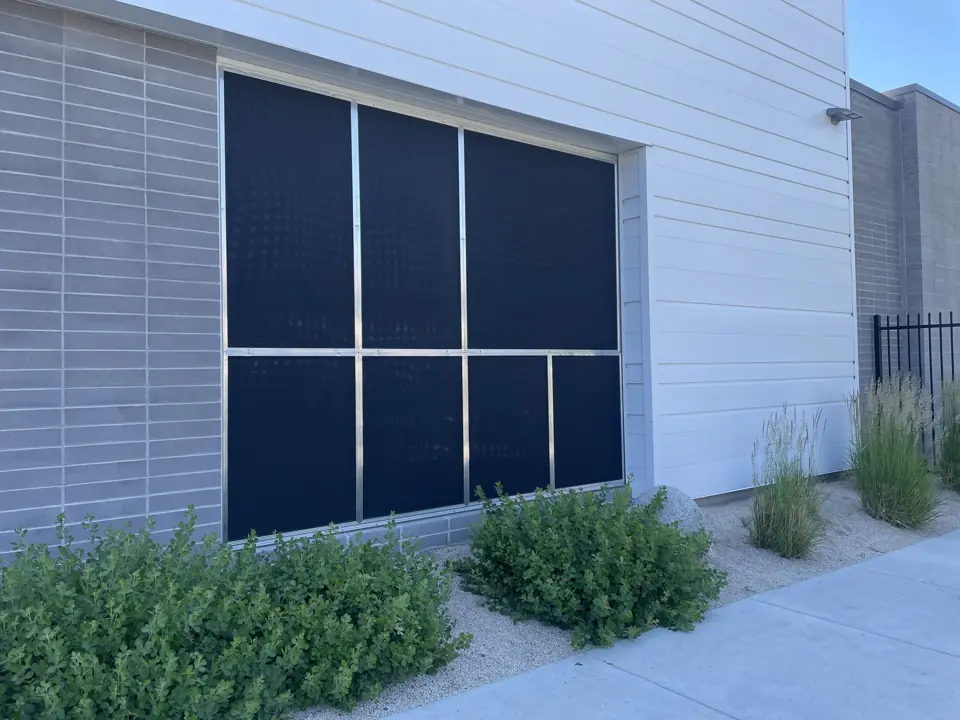
The before and after photos on this page are one of our commercial jobs: a large storefront window on a commercial building, first as bare glass and then covered with dark solar screens. From the street the glass reads as one even, darker surface instead of a bright reflection, and the sun is stopped outside the building.
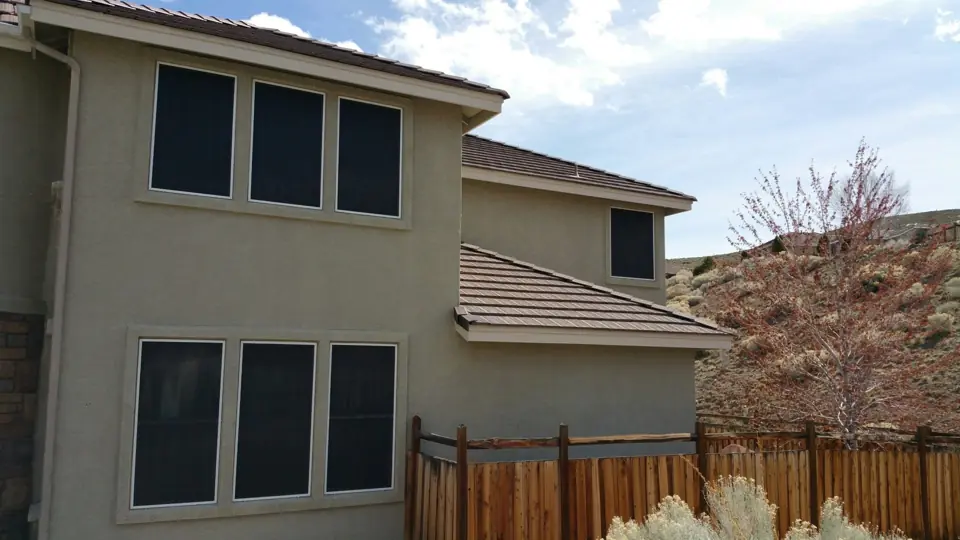
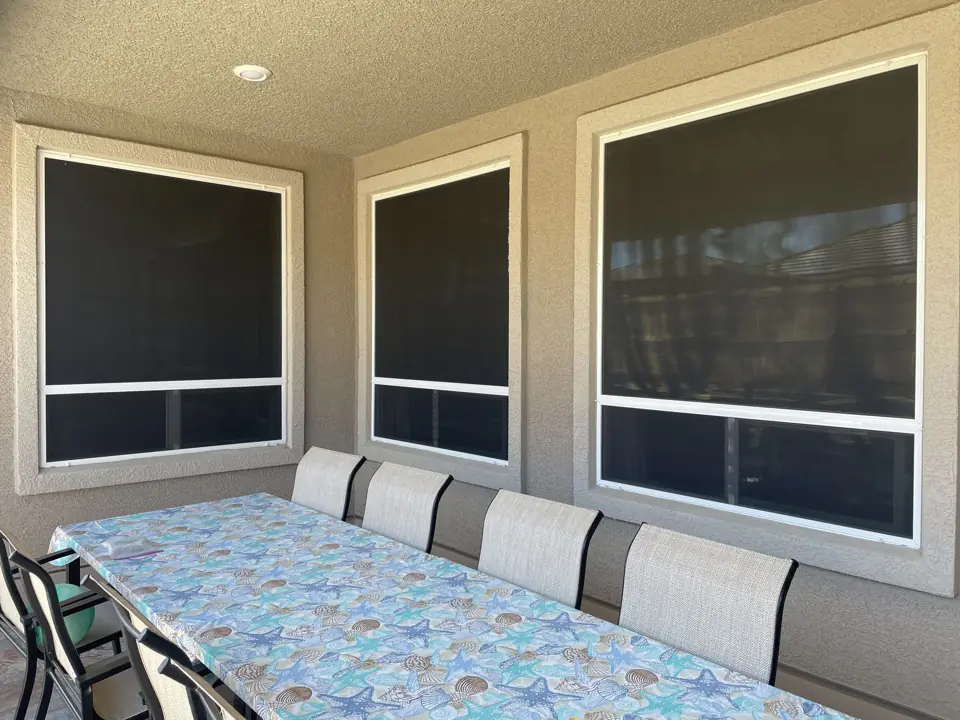
The product is the same kind of solar screen we put on homes, a dense shade fabric stretched in a metal frame and mounted outside the glass. The difference is size. Commercial windows are often wider and taller than residential ones, so the screens are measured and built opening by opening.
Why businesses shade their windows
Big panes of glass let in a lot of afternoon sun. The U.S. Department of Energy notes that solar screens can reduce solar heat gain, UV damage and glare, and that exterior shading is among the most effective ways to cut heat gain because it stops sunlight before it passes through the glass. Our guide to ways to block sun compares screens with film, blinds and awnings.
- Glare on computer monitors, point-of-sale screens and display cases
- Hot desks and waiting areas near west-facing glass, then east
- UV fading of merchandise, signs, flooring and furniture near the window
- Daytime privacy for offices that face a parking lot or sidewalk
The Reno-Sparks sun on commercial glass
NOAA's 1991-2020 normals for Reno-Tahoe International Airport show about 65 days a year at 90 degrees or hotter, with July highs averaging near 94 degrees. At about 4,400 feet of elevation the valley also gets more UV than a sea-level city; the EPA's rule of thumb is roughly 2 percent more for every 1,000 feet. A storefront facing west takes that sun straight through the busiest part of the afternoon.
UV is the part of sunlight that fades dyes in packaging, clothing, posters and flooring. The EPA notes that UV peaks in spring and summer, from April to August, and at midday when the sun is highest. A display window that faces south or west spends months in that light, which is why the goods closest to the glass usually fade first.
Which windows to start with
Most businesses do not need every pane covered. West-facing glass takes the low, hot sun of late afternoon and is usually the first priority. East glass gets the morning sun, which matters for offices that open early. North glass rarely needs a solar screen.
South glass is worth a conversation. Solar screens block winter sun as well as summer sun, and a south-facing lobby may enjoy that low winter light. Some owners screen the south side for glare and fading anyway, and others leave it open. Our guide to solar screens in winter explains the trade-off, and we can quote the building one side at a time so you can decide.
Choosing fabric for a business
Most businesses want two things that pull in opposite directions: less glare and heat, and a clear view in and out so the space still looks open. A more open fabric keeps the view and the daylight, while a tighter weave blocks more sun. Darker colors are often easier to see through from inside. We bring fabric samples so you can judge them against your own glass and signs, and our guide to 80 vs 90 percent solar screens explains the ratings.
If you lease your space, check whether the building owner needs to approve exterior changes before work is scheduled. We are glad to give the owner or property manager the same quote.
| Consideration | Why it matters | What we look at on site |
|---|---|---|
| Lettering and graphics | A screen in front of the glass makes window lettering harder to read from the street | Which panes carry signs and whether to leave them open |
| Very large panes | Wide glass needs frames that stay flat and tight across the span | How the opening is divided by existing mullions |
| Doors and entries | Customers need a clear, easy way in | Whether door glass is screened or left bare |
| Height and access | Upper-floor glass, planters and awnings change how the work is done | Ladder placement and safe access |
| Owner approval | Leased spaces often need sign-off for exterior changes | A quote you can pass to the owner or manager |
| Night view | With lights on inside, it is easier to see in after dark | Where interior lighting and displays sit |
These are typical considerations. Every building is measured and planned on site.
Measuring and installation
We measure every opening on site, since commercial frames and mullions vary more than house windows. Screens are built to those measurements and mounted on the outside of the window. Tell us about anything that affects access, such as planters, awnings or upper-floor glass, when you call so we can plan the visit.
Several windows on one building can qualify for our multi-window discount. Installation carries a lifetime warranty, and solar screen material a 20-year warranty.
Screens, film or blinds?
Interior blinds are cheap to add but catch the sun only after it is inside, and staff tend to leave them shut all afternoon. Window film goes on the glass itself and stays there year round. An exterior solar screen stops the sun outside, keeps a view out through the fabric, and can come down if the space changes hands or the use of a room changes.
Many businesses mix them: screens on the west glass that gets the worst sun, blinds for rooms that need full darkness, and bare glass on the north side. We are happy to talk through the whole building, not just the windows we would screen.
Repairs to existing screens
If your building already has solar screens that are faded, torn or bent, we can quote new fabric in the existing frames where the frames are sound, or new screens where they are not. The same approach is used for insect screens, see screen repair and rescreening.
Signs your building could use solar screens
- Staff tilt monitors or close blinds to fight afternoon glare
- Merchandise, signs or flooring near the window are fading
- Desks or waiting chairs near west glass are too warm to use late in the day
- Blinds stay closed all afternoon, so the space looks shut from the street
- Existing exterior screens are faded, torn or bent
- An office faces a parking lot and wants more daytime privacy
Before you call
- List the windows by side of the building. West and south glass usually matter most.
- Check your lease. If you rent, ask whether exterior changes need the owner's approval.
- Note signs on the glass. Painted lettering or vinyl graphics affect which panes get screens.
- Mention access. Planters, awnings, upper-floor glass or a busy sidewalk help us plan the visit.
How a commercial job goes
Commercial work follows the same steps as a home, with a little more planning for access, signs and approvals.
- Walk-through. We look at each window with you and talk about glare, heat, signs and how the space is used.
- Measure and samples. Every opening is measured, and fabric samples are held up to your own glass.
- Quote. You, or the building owner, get a quote by window with any discount applied. Installation carries a lifetime warranty and solar screen material a 20-year warranty, see our warranty page.
- Build. Frames are made to each measured opening.
- Install and review. Screens mount outside the glass, and we check fit and appearance from the street and from inside.
Price
What affects the price
- Number and size of windows. Storefront panes take more fabric and heavier frames than house windows.
- Height. Upper-floor glass needs ladders or other access and more time on site.
- Mullions and shapes. Glass divided into many panes means more screens, each built to size.
- Fabric. Openness and color change the look and the view, so compare samples.
- Mounting surface. Storefront metal, stucco and brick each take different fasteners.
- Existing screens. Sound frames can take new fabric, while bent ones need replacing.
Every commercial price is quoted after a free walk-through and measure. Several windows on one building can qualify for the multi-window discount.
Reno-Sparks
Afternoon sun and wind on Reno-Sparks storefronts
Most Reno-Sparks shopping centers and offices sit on the valley floor near 4,400 feet. The Department of Energy notes that in cooling season about 76 percent of the sunlight falling on standard double-pane windows enters as heat, and NOAA counts about 65 days a year at 90 degrees or hotter at the airport.
Afternoon brings the wind as well as the sun. NOAA's hourly normals show April through July afternoons averaging about 13 miles per hour, mostly from the west, with the windiest hour in the late afternoon. Screens on commercial glass are fastened with that in mind. More local figures are on our Reno sun data page.
Sources: NOAA NCEI U.S. Climate Normals 1991-2020, annual and hourly, Reno-Tahoe International Airport; U.S. DOE Energy Saver, Energy Efficient Window Coverings (archived).
Keeping commercial screens looking sharp
- Rinse screens with a hose when you wash the sidewalk or windows, since dust shows on dark fabric
- Ask window cleaners to lift screens out gently or clean around them rather than forcing them
- Keep pressure washers away from the fabric and the edges
- Check screens for loose clips after a windy week, especially on west-facing walls
- Call early about tears near doors, where carts and bags brush the screens
- Store any removed screens flat and indoors
Our work
Before and after

Reviews
What customers say
“Attorney located in California who owns 14 rental properties throughout NV. When we decided to place screens on all doors and windows on one of my properties in Reno, we were a bit concerned with finding the right company to do the work. ... We came across A-Affordable Screen using the Yellow Pages. They were VERY helpful, honest, and reasonable, but what we liked best is that they are an individually owned and operated. We defiantly recommend anyone looking for quality service!”
“Called directly to get details, provide options to solve our specific needs and explain the process to get us our screens. Great communication throughout both by text and phone calls. Service was completed in timeframe promised. Quality of screen material a new frames is excellent! Definitely recommend.”
Questions
Straight answers
Can people still see into the store with solar screens?
In daylight the screens make it harder to see in from outside, which adds privacy. At night, with interior lights on, it reverses, so plan signs and lighting with that in mind. Our guide to solar screen colors and privacy explains why.
Do solar screens work on very large windows?
Yes. Large storefront glass is covered with screens built to each opening, like the job shown on this page.
What about window graphics or signs painted on the glass?
An exterior screen sits in front of the glass, so lettering on the window will be harder to read from the street. Many businesses move that information to a sign or leave the sign window unscreened, and we can plan around it at the measuring visit.
Do solar screens help in winter too?
They also block winter sun, which some south-facing spaces welcome for warmth. If that matters for your building, we can talk through which windows to screen and which to leave open to the low winter sun.
Will the screens change how the building looks?
They give the glass a darker, more even look from outside. Fabric color is your choice, and we bring samples to compare on site.
Can you screen just one side of the building?
Yes. Many businesses start with the glass that takes afternoon sun and leave the rest. We can quote the building side by side so you can choose.
Do you work with property managers and building owners?
Yes. We can meet a manager on site and send the quote to whoever approves exterior changes. The free quote form is an easy way to start.
Related
Related services
Commercial Solar Screens across Reno-Sparks
Sources: U.S. Department of Energy, Energy Saver: Energy Efficient Window Coverings (archived copy, January 2025) (opens in a new tab) · NOAA NCEI, U.S. Climate Normals 1991-2020 (Reno-Tahoe International Airport) (opens in a new tab) · U.S. EPA, A Guide to the UV Index (EPA 430-F-04-020) (opens in a new tab)
Since 1997 · Sparks, Nevada
Ready for a free quote?
Call or text us. Or leave your details and we call or text you back.
Monday-Friday 8:00 am-4:00 pm
We come to you anywhere in the Reno-Sparks area to measure and quote, at no charge.