
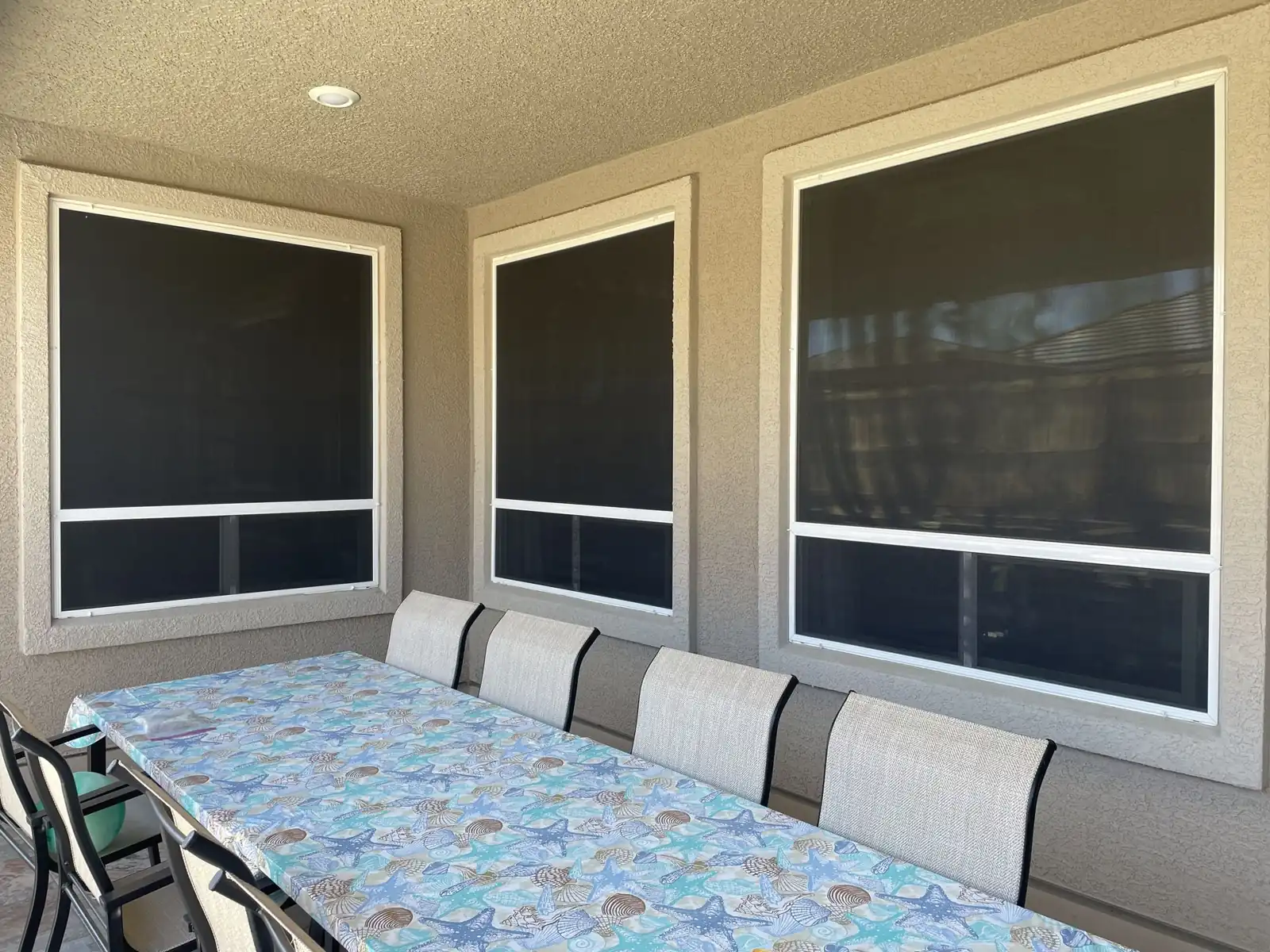
Solar screens
Are solar screens worth it in the high desert?
For west- and east-facing rooms that overheat in summer, solar screens are usually worth it in Reno-Sparks for comfort, glare and slower fading, even though Nevada's relatively low electricity prices mean the dollar savings alone are modest. They are harder to justify on north windows, and on south windows unless you take them down for winter.
Updated · A-Affordable Screen, Sparks
The case for: Reno summers are real
The Truckee Meadows is not Las Vegas, but it is hot where it counts. NOAA's 1991-2020 normals for Reno-Tahoe International Airport show 65 days a year reaching 90 degrees and about 6 days reaching 100, with a July average high near 94. Recent summers have run hotter than that 30-year baseline: across 2016 to 2025, NOAA daily records at the airport averaged about 77 days a year at 90 or above and about 13 at 100 or above, with a peak of 108 degrees on July 16, 2023.
Nearly every house here fights that heat with air conditioning. The U.S. Energy Information Administration's 2020 Residential Energy Consumption Survey found 92 percent of Nevada homes use air conditioning, and 78 percent use central air.
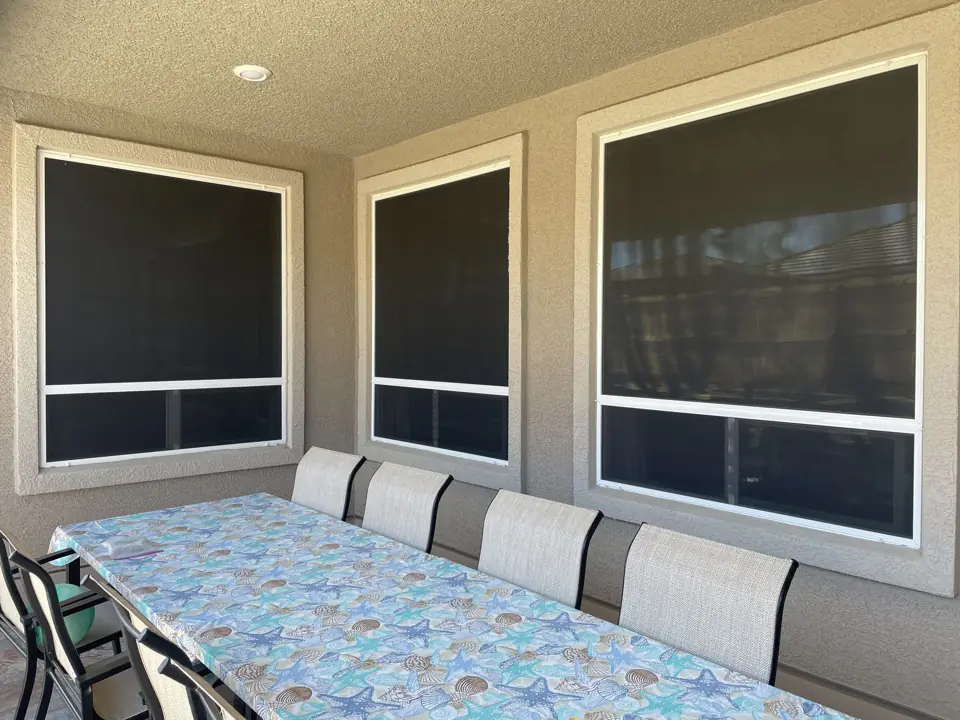
Reno-Sparks by the numbers
These are the figures that decide whether a solar screen earns its place on a given window. More charts are on our Reno-Sparks sun and climate data page.
| Measure | Figure | What it means for screens | Source |
|---|---|---|---|
| Days at 90F or hotter | 65.1 a year (normal); about 77 a year in 2016-2025 | Plenty of hot afternoons on west glass | NOAA NCEI normals; GHCN-Daily |
| Days at 100F or hotter | 6.0 a year (normal); about 13 in 2016-2025 | The worst days are getting more frequent | NOAA NCEI normals; GHCN-Daily |
| Summer average high (June-August) | 90.2F | Cooling season is short but intense | NOAA NCEI normals |
| Cooling degree days vs heating degree days | 1,038 vs 4,669 | Take south screens down in winter | NOAA NCEI normals |
| Nevada homes with air conditioning | 92 percent | Almost everyone pays to cool | EIA RECS 2020 |
| Nevada residential electricity, July 2026 | 12.77 cents per kWh (U.S. 18.31) | Dollar savings are smaller than in high-rate states | EIA Electric Power Monthly |
| Extra UV from altitude | roughly 9 percent more than sea level at about 4,400 feet | Faster fading of floors and fabrics | EPA UV Index guide (2 percent per 1,000 ft rule) |
Airport readings. Foothill neighborhoods run a little higher and windier; see our South Reno and Spanish Springs pages.
What windows do to a hot room
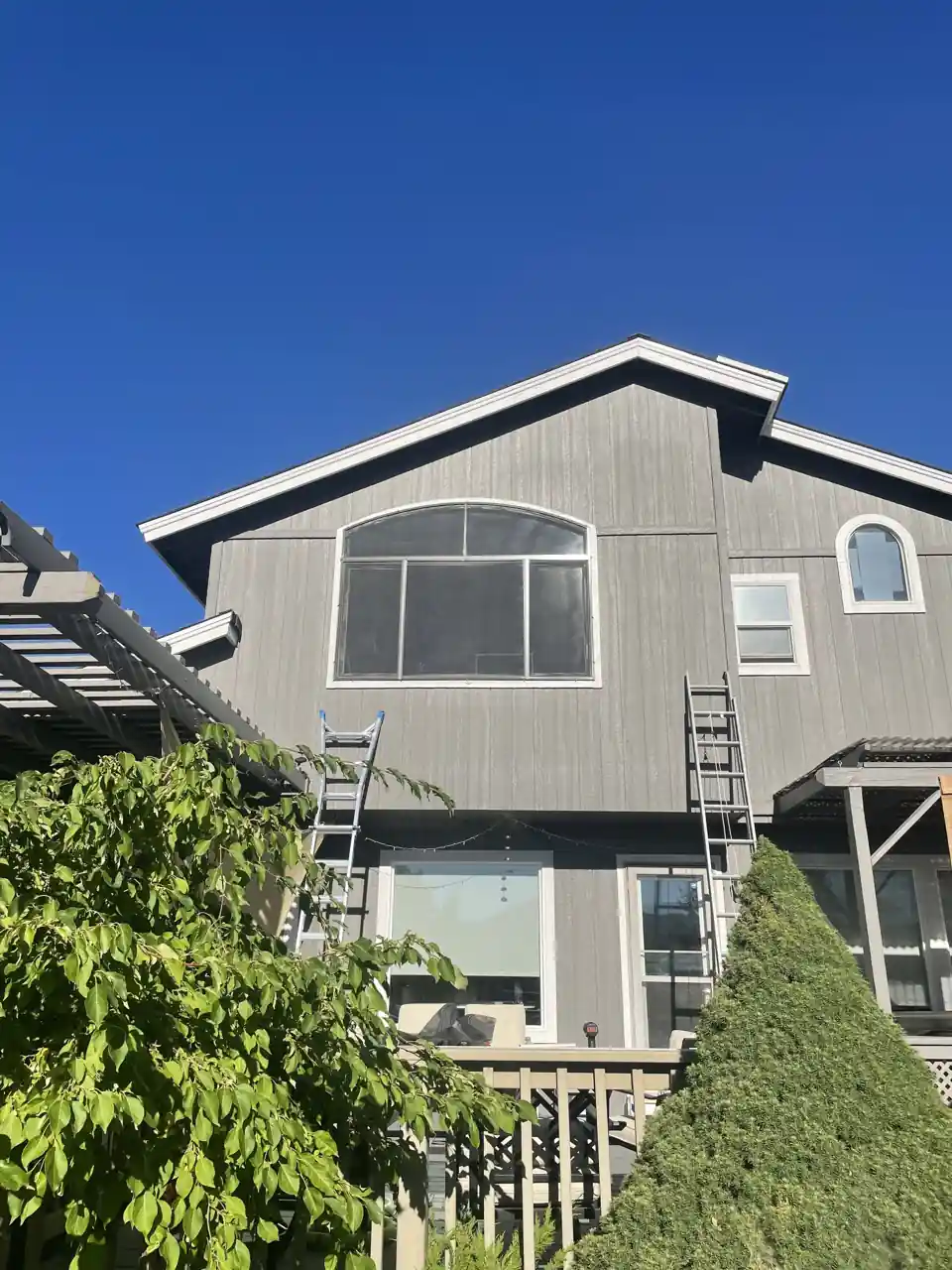
Windows are where the sun gets in. The Department of Energy's Energy Saver guidance says, 'In cooling seasons, about 76% of sunlight that falls on standard double-pane windows enters to become heat.' That is why one west-facing slider can make a family room several degrees warmer than the rest of the house by late afternoon.
DOE describes solar screens as able to 'reduce solar heat gain, UV damage, and glare,' and a 2024 Lawrence Berkeley National Laboratory handout on shading says exterior-mounted solutions 'Provide the highest protection from solar heat.' Stopping the sun outside the glass, before it becomes solar heat gain, is the right idea. Our comparison of ways to block sun sets screens beside tint, blinds and awnings.
The honest caveat: money savings vary
Be wary of anyone who promises a specific percentage off your power bill. There is no government figure for how much solar screens cut cooling costs in a given home, and results depend on the glass, the orientation, the shade from trees and eaves, and how you run your thermostat.
Two local facts cut against big dollar savings. First, electricity is relatively cheap here. EIA's Electric Power Monthly lists Nevada's average residential price at 12.77 cents per kilowatt-hour in July 2026 (preliminary), against a U.S. average of 18.31 cents, so each kilowatt-hour you avoid is worth less than it would be in most states. Second, Reno is heating-dominated. NOAA's normals show about 4,669 heating degree days a year against 1,038 cooling degree days, and Lawrence Berkeley National Laboratory's 2013 study for DOE found that in central climate zones, 'Solar screens and roller shades are effective in saving cooling energy, but they impose a penalty on heating energy, making them largely ineffective in saving overall energy.' Screens left up all winter give some of the summer savings back. Our winter guide explains which ones to remove.
Where the value really is
- Comfort in one or two problem rooms: the west bedroom that will not cool down, the family room slider, the home office where the monitor washes out at 4 p.m.
- Glare: a solar screen cuts the bright, direct sun that makes rooms hard to use in the afternoon.
- Fading: carpets, wood floors, artwork and furniture near sunny glass. The EPA notes UV rises about 2 percent per 1,000 feet of elevation, and the valley floor sits near 4,400 feet.
- Daytime privacy: the fabric makes it hard to see in from the street during the day. Our colors and privacy guide covers what changes at night.
- Night air: Reno summers cool off sharply after dark, with an average summer range of about 33 degrees between the day's high and the night's low (NOAA normals). A solar screen on an operable window doubles as an insect screen, so you can open up at night.
Homes where screens tend to earn their keep
Newer tract homes are a common fit. Census ACS 2020-2024 figures show that in ZIP 89521 in South Reno about 76 percent of homes were built in 2000 or later, and in Spanish Springs the median home was built in 2002. Many of those houses have large sliders and picture windows, often with little eave overhang and young landscaping that does not yet shade the glass.
Older homes in central Sparks and Reno often have more mature trees and smaller windows, so the case there is usually room by room. A patio that faces west can be a better project than the windows behind it; patio shade screens close in the open side of a cover and shade the wall and glass together.
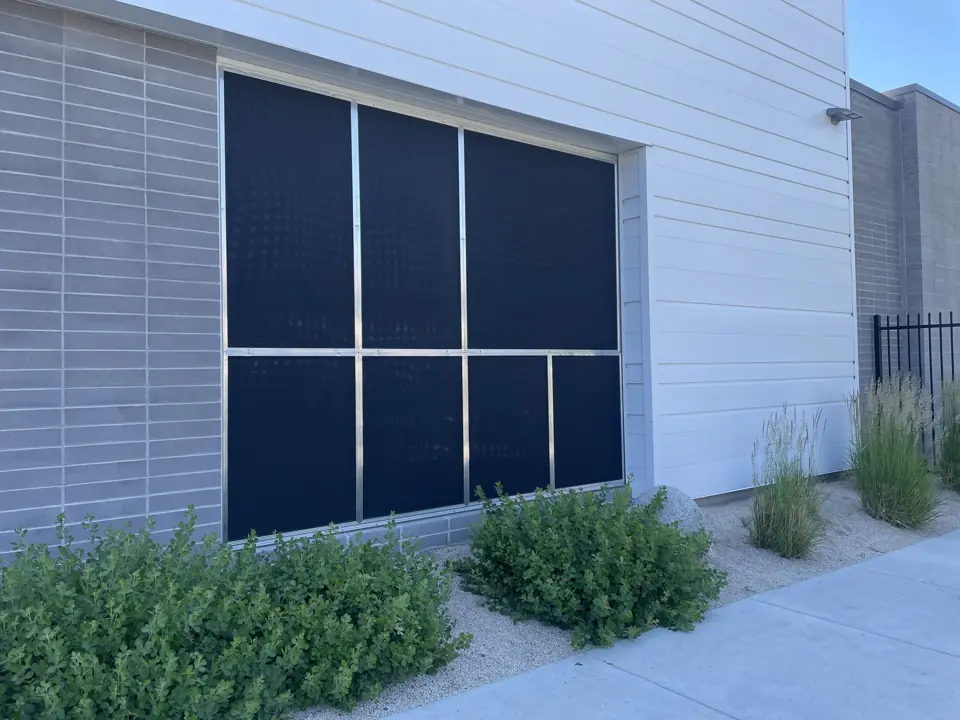
Businesses with big storefront glass see the same glare and fading problems at a larger scale. Commercial solar screens are measured and built the same way.
When they are probably not worth it
- North-facing windows that never see direct sun.
- Windows already shaded by deep eaves, a porch roof or mature trees.
- South-facing living areas you rely on for winter warmth, unless you are willing to remove the screens each fall.
- Homes where the owner's real goal is lower heating bills; screens are a summer product.
- Rooms where you want the brightest possible view all day and glare is not a complaint. Plain insect window screens may be all you need there.
What solar screens do not do
Solar screens shade glass. They do not insulate a window in winter, they do not filter wildfire smoke, and they do not replace a failed window seal. On smoky days, close the window. If a double-pane window is fogged between the panes, that is a glass problem that a screen will not fix.
They also do not all perform the same. DOE notes that 'The openness factor on solar screens varies and affects the efficiency benefits; greater openness reduces the protection against glare and solar heat gain but increases visibility and light transmission.' Our 80 vs 90 percent guide explains the openness factor in plain terms.
A sensible way to decide
When we visit, we look at the same things: orientation, shade, the glass you have, and how each room is used. Sometimes the right answer is fewer screens than you expected. The measure and the quote are free, and we bring fabric samples. If cost is the next question, our solar screen cost guide lists published price ranges.
- Walk the house on a hot afternoon. Note which rooms are uncomfortable and which way their windows face.
- Rank the windows. West glass usually comes first, then east bedrooms, then south. North windows go to the bottom of the list.
- Check for existing shade. Eaves, porch roofs and trees may already do the job on some windows.
- Test with the worst two or three. Live with them for a summer before doing the whole house.
- Plan for winter. Decide which screens will come off each fall so the mounting hardware suits that.
Questions
Straight answers
Do solar screens really work?
Yes, as shading. DOE says they reduce solar heat gain, UV damage and glare, and LBNL ranks exterior shading as the strongest protection from solar heat. How much a given room cools depends on its windows and exposure.
How much will solar screens lower my power bill?
No one can honestly give a fixed number. Nevada's electricity is cheaper than the U.S. average, so buy them mainly for comfort, glare and fading, with savings as a bonus.
Should I put solar screens on every window?
Usually not. West and east windows benefit most. North windows rarely need them, and south windows are better left clear in winter.
Do solar screens hurt in winter?
They can cost you some free solar heat. LBNL found a heating penalty in central climates, which is why many Reno owners take south and some east screens down for winter.
Are solar screens better than window tint here?
Each has a place. Screens stop sun outside the glass and can come off in winter; film stays on all year. Our screens vs tint guide compares them side by side.
Sources: NOAA NCEI: U.S. Climate Normals 1991-2020 (Reno-Tahoe International Airport) (opens in a new tab) · LBNL for U.S. DOE: Energy Savings from Window Attachments (Oct. 2013) (opens in a new tab) · U.S. DOE Energy Saver: Energy Efficient Window Coverings (archived Jan. 1, 2026) (opens in a new tab) · U.S. EIA: Electric Power Monthly, Table 5.6.A (average retail price by state) (opens in a new tab) · U.S. EIA: 2020 RECS, air conditioning by state (opens in a new tab)
Since 1997 · Sparks, Nevada
Ready for a free quote?
Call or text us. Or leave your details and we call or text you back.
Monday-Friday 8:00 am-4:00 pm
We come to you anywhere in the Reno-Sparks area to measure and quote, at no charge.